Author Archives: stdavidandstpatrick

Why Francis and Benedict have one Green mind.

Later this week the Church expects to receive Pope Francis’ latest encyclical letter celled “Laudato Si – on the environment.” Here’s a interesting article that shows Pope Francis’ thinking is really nothing radical, but an extension of what Pope Benedict started.
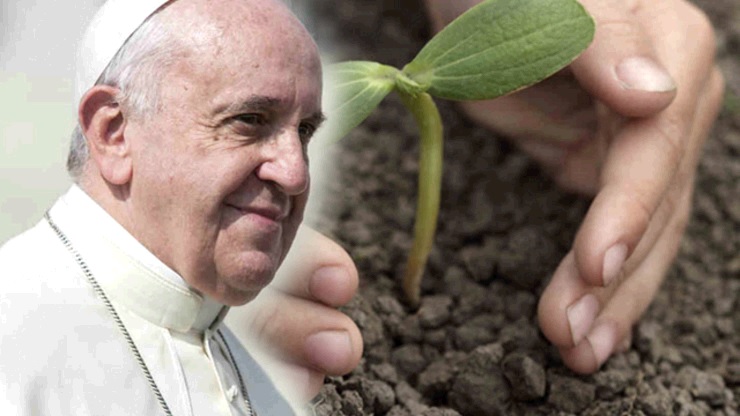
pope-environment

Mythology and media narratives to the contrary, Pope Francis has far more in common with Pope Benedict XVI than whatever separates them. Francis probably could be better understood as “Benedict 2.0,” supplying a warmer and more populist package for the same basic positions espoused by his more cerebral predecessor.

The release on Thursday of Pope Francis’ highly anticipated encyclical letter on the environment, Laudato Si, may well be the latest proof of the point.

First of all, it’s hardly as if embracing the cause of fighting climate change, saving the rainforests, and otherwise protecting the environment is somehow a break with Benedict. On the contrary, Benedict was famously the pope who installed solar panels atop a Vatican audience hall and signed an agreement to make the Vatican Europe’s first carbon-neutral state in order to back up his strong ecological concerns.

In a speech to the German parliament in 2011 – a speech, by the way, that probably meant more to the German pontiff than most he delivered during his eight-year reign – Benedict said the rise of Germany’s Green movement in the 1970s was “a cry for fresh air, a cry that cannot be ignored or put aside.”

Yet Benedict also tried to paint a distinctly Catholic shade of green in the way he approached environmental questions, and Francis recently provided a hint he’s thinking the same way.

In brief comments to reporters aboard the papal plane returning from last Saturday’s trip to Bosnia, Francis said his forthcoming environmental encyclical will deal, among other topics, with relativism, which he described as a “cancer of society.” (In the same breath, Francis also called consumerism a “cancer.”)

Relativism is a philosophical position that holds there are no absolute moral rules, because everything is relative to particular circumstances and individuals. At the popular level, it refers to an “anything goes” morality opposed to traditional Catholic teaching.

It might seem odd for Francis to use an environmental tract to bring up a debate over moral philosophy, but that’s where understanding the mind of Benedict XVI helps.

For Benedict, secular environmentalism is the most promising route for recovery of a strong sense of “natural law,” meaning the idea that right and wrong, truth and falsehood, are real qualities which exist in nature, and which human beings can discover using their reason and conscience.

Many Catholic thinkers, prominently including Benedict XVI, worry that natural law has been supplanted in the popular mind either by relativism or by positivism, the idea that moral rules are imposed by human authority and thus more akin to the speed limit than to gravity – something invented, instead of being given in nature.

Benedict believes that environmentalism is leading people back to the idea of natural law, because it proves that limits on what human beings can do without paying a price aren’t just arbitrary but absolutely, objectively real.

“Everyone can see today that … we can’t simply do whatever we want with this earth that has been entrusted to us, we have to respect the inner laws of creation, of this earth, if we want to survive,” Benedict said in 2007.

From there, Benedict said, we may learn to listen to human nature as well, discovering moral laws that stand above our own ego. Benedict called all this a “secular path” to the formation of conscience.

His comments on relativism last Saturday indicate Francis is likely to make a similar point, treating environmentalism not just as an important social cause, but also a moral teaching moment.

One could go on cataloguing the links between Francis and Benedict. This week, for instance, Francis devoted one of his morning homilies to insisting that Christians must not “weaken or water down” their identity, warning against the influence of “modern Gnostics” and an “insipid religion of just prayers and ideas.”

Through the history of salvation, Francis said, God has led the Church progressively from “ambiguities” to “certainties.” Close your eyes, and you easily could have believed you were hearing Benedict XVI.

In most of the ways that matter, what’s changed from Benedict to Francis isn’t the lyrics, but the music. Instead of Wagner, people today seem to hear a saucy Latin rhythm when the pope speaks, often making the message easier to take.

Last week, for example, Francis met the bishops of Puerto Rico in the Vatican, presenting them with a speech blasting gay marriage and “gender theory” in exactly the same terms Benedict XVI would have used. Francis did it, however, while inviting the bishops to join him for lunch, joking that “a little wine will loosen the tongue and you can tell me the truth.”

The real difference between the two pontiffs may lie in reach and effectiveness, not content. Francis has succeeded in convincing a wide swath of people, especially those outside the Church, that he values their experiences and cares about their perspectives. That impression makes them more inclined to view his take on things with sympathy rather than skepticism.

Warmth, in other words, isn’t just about packaging and tone. It also translates into power, meaning the ability to shape opinion and to win hearts and minds where others have failed.

Laudato Si seems destined to be the latest chapter in this bond between Benedict and Francis, with the key question being whether Francis’ more enchanting presentation once again allows his “2.0” version of the message to pack a greater punch.

Neighbourhood Police Team at Withybush Hospital

PoliceFireNHS

Parishioners will know that Fr Liam is both a Chaplain at Withybush hospital and is also a volunteer Police Chaplain for Dfed-Powys Police. He has been working recently with chaplaincy members and local services to help support a new initiative. It can now be announced that…

Dyfed-Powys Neighbourhood Policeing Team, Mid and West Wales Fire and Rescue Service and Withybush Hospital are coming together to offer a monthly, open surgery located at the front door of Withybush Hospital. Any member of the public can come to ask questions, obtain advice and to raise any concerns which they have regarding local police, fire and community issues. This advice and information hour will take place from 12noon to 1pm on the first Thursday of every month.

Fire: http://www.mawwfire.gov.uk/…/Pembrokeshi…/Pages/default.aspx

Police: http://www.dyfed-powys.police.uk/…/pembrokes…/haverfordwest/

Click on the poster below for more information.

NPT Withybush

First Holy Communion.

HC 7

Congratulations and well done to those men and women of the parish who today received Holy Communion for the first time.  Many thanks to all those who helped to prepare them for this day of grace and to all those who had some part to play – be it decorating the church, preparing the breakfast party, and so on. It’s wonderful to see our school and parish coming together when our younger members receive the sacraments. May God bless you all and fill you with his strength and love. (More pictures here)

Polling Day!

Today’s the day of the big vote! I’ve already voted by post – have you?vote

O God, who arrange all things according to a wonderful design, graciously receive the prayers we pour out to you for our country, that, through the wisdom of its leaders and the integrity of its citizens, harmony and justice may be assured and lasting prosperity come with peace. Through our Lord Jesus Christ, you Son, who lives and reigns with you in the unity of the Holy Spirit, one God, for ever and ever. Amen.

How to Vote?

It’s almost time to vote – this coming Thursday, the nation heads to the ballot box. It is right and good that everybody who is entitled to vote, should indeed vote. The Church actually says that participation in community life is one of the greatest aspirations of the citizen,[1] and that it is self evident that every democracy must be participative.[2] This means that the different subjects of civil community, at every level must be informed, listened to and involved in the exercise of the carried-out functions.[3]

So, given that we should vote, in which box should we each place our ‘X’?

Election

We should vote for that party whose policies are, for the greater part, in conformity to the permanent principles of the Church’s social doctrine.

These principles, which have a fundamental character,[4] are

  • the dignity of the human person,
  • the common good,
  • the universal destination of goods,
  • the preferential option for the poor,
  • the principle of subsidiarity,
  • participation and
  • solidarity.

But, what exactly are these principles and what do they mean?

The dignity of the human person means we should consider every neighbour without exception as another self, taking into account first of all his life and the means necessary for living it with dignity.[5] Do our politicians and political parties do this, are we going to vote for a party which allows the means for all to live with dignity from conception to death, irrespective of any unjust prejudice?

The principle of the common good, stems from the dignity, unity and equality of all people. According to its primary and broadly accepted sense, the common good indicates “the sum total of social conditions which allow people, either as groups or as individuals, to reach their fulfilment more fully and more easily”.[6]

Just as the moral actions of an individual are accomplished in doing what is good, so too the actions of a society attain their full stature when they bring about the common good. The common good, therefore, can be understood as the social and community dimension of the moral good.[7]

Given this principle then, we have to ask ourselves: do the people for whom we wish to vote, want to promote the common good of all society, or are they just interested in promoting individual gain?

The universal destination of goods is that principle whereby we acknowledge that God created the earth, and all its contents, for the good use of all mankind. This means that all things should be shared fairly by all under the guidance of justice tempered by charity.[8] Each person must therefore have access to the level of well-being necessary for his full development.

This has big implications of social welfare and our tax system. The fundamental question then is: will each person in society have access to the level of well-being necessary for his full development, if I vote for a particular party?

From this principle extends the next one, the preferential option for the poor. The principle of the universal destination of goods requires that the poor, the marginalized and in all cases those whose living conditions interfere with their proper growth should be the focus of particular concern. St John Paul II said: “Today, given the worldwide dimension which the social question has assumed, this love of preference for the poor, and the decisions which it inspires in us, cannot but embrace the immense multitudes of the hungry, the needy, the homeless, those without health care and, above all, those without hope of a better future.”[9] A sentiment which has been echoed may times by Pope Francis.

This principle should come to mind when we think of issues surrounding overseas aid, domestic welfare and social housing. Likewise too, we need to consider healthcare offered by the NHS and education in our schooling system which many of us couldn’t possibly hope to afford.

The principle of subsidiarity was first described by Pope Leo XIII in the Church’s first social encyclical.[10] It is a principle which states that lower level decisions should be made at a local level, without interference form above. Therefore it follows that families can make decisions about themselves, local councils can decide solutions for local issues, and so forth. The principle of subsidiarity protects people from abuses by higher-level social authority and calls on these same authorities to help individuals and intermediate groups to fulfil their duties. This principle is imperative because every person, family and intermediate group has something original to offer to the community. Experience shows that the denial of subsidiarity, or its limitation in the name of an alleged democratization or equality of all members of society, limits and sometimes even destroys the spirit of freedom and initiative.[11]

This would invite us to question each party to see where they stand on local issues. Furthermore we should ask will each party devolve the right amount of responsibility to a local level to make it the most effective? Or, should we be concerned that a possible future government will draw all power to itself to satisfy its own ends?

With this principle comes too the responsibility to participate in an effective and meaningful way in the level of society in which we find ourselves. Participation is a principle which is expressed essentially in a series of activities by means of which the citizen, either as an individual or in association with others, whether directly or through representation, contributes to the cultural, economic, political and social life of the civil community to which he belongs.[12]

It is this principle which means we should vote, and contribute in other ways too, to the building of a better society.

Finally we have the principle of solidarity. Solidarity highlights the intrinsic social nature of the human person, the equality of all in dignity and rights and the common path of individuals and peoples towards an ever more committed unity. Solidarity is also an authentic moral virtue, not a “feeling of vague compassion or shallow distress at the misfortunes of so many people, both near and far. On the contrary, it is a firm and persevering determination to commit oneself to the common good. That is to say to the good of all and of each individual, because we are all really responsible for all”.[13]

To put some practical bones on these rather academic words, the bishops of England and Wales have made a series of video clips. I would encourage you to watch as many of them as you can.

On Thursday, make the right choice, choose the government which you think will best further these principles.

[1] Cf. John XXIII, Encyclical Letter Pacem in Terris: AAS 55 (1963), 278.

[2] Cf. John Paul II, Encyclical Letter Centesimus Annus, 46: AAS 83 (1991), 850-851.

[3] Pontifical Council for Justice and Peace, Compendium of the Social Doctrine of the Church, 190: Libreria Editrice Vaticana (2004), 108.

[4] Ibid., 161.

[5] Second Vatican Ecumenical Council, Pastoral Constitution on the Church in the Modern World Gaudium et Spes, 27: AAS 58 (1966), 1047.

[6] Ibid., 26.

[7] Cf Pontifical Council for Justice and Peace, Compendium of the Social Doctrine of the Church, 164: Libreria Editrice Vaticana (2004), 93.

[8] Ibid., Gaudium et Spes, 69.

[9] John Paul II, Encyclical Letter Sollicitudo Rei Socialis, 42: AAS 80 (1988), 572-573.

[10] Leo XIII, Encyclical Letter, Rerum Novarum: Acta Leonis XIII, 11 (1892), 101-102, 123.

[11] Ibid., Compendium of the Social Doctrine of the Church, 187.

[12] Ibid., Gaudium et Spes, 75.

[13] Ibid., Sollicitudo Rei Socialis, 38.