Prayer for the too busy Christian

St F

St Faustina, being a member of a religious order, typically had many opportunities to pray throughout the day, and many of these times of prayer led to profound encounters and conversations with Jesus in the Blessed Sacrament. Once, though, she was allowed to visit her dying mother back at home and while there she was overburdened by so many family and friends who wanted to visit with her. Her time for prayer greatly diminished because she was so busy tending to her family needs. She tried several times during her time at home to sneak away for some conversation with the Lord, but each time her family demanded her attention. After her return to the convent, she wrote this in her diary:

“When I entered the chapel to say goodnight to the Lord before retiring, and apologized for having talked so little to Him when I was at home, I heard a voice within my soul, I am very pleased that you had not been talking with Me, but were making My goodness known to souls and rousing them to love me.

A few things to point out from this brief entry:

– St Faustina was too busy to spend her preferred amount of time in prayer. The Lord saw her busyness and he understood. In fact, not only did he understand, but he was pleased that she didn’t avoid her duty so that she could pray. It was more important for St Faustina to be attentive to the demands of her family than to spend huge amounts of time in prayer. Being attentive to her family was transformed into a type of prayer to the Lord.

– She still took time to pray. The first line: “When I entered the chapel…” Yes, she was very busy, but she still took time to pray. While she was home, she doesn’t apologize for NOT talking to the Lord, but for talking so little to him. She spoke to the Lord every day.

– She made the Lord’s goodness known and she roused her family to love him. While performing her duty, she helped others know the glory of God.

These three things may be helpful to anyone who struggles to find time to pray in the midst of a busy world, one which tends to place too many burdens on our shoulders. These three things will help the overburdened Christian discover that the Lord takes pleasure in our efforts to love him:

1. Always perform your duty with diligence, even if it means spending less than the preferred amount of time with the Lord.

2. Take time to pray everyday. Finding time is difficult; taking time is less difficult. Begin or finish the day with prayer and speak to the Lord for brief periods of time throughout the day.

3. While performing your duty, reveal to others the glory of God. Rouse others to love him more, simply by the way you attend to their needs.

copied from http://evangelicaldisciple.com and posted by Posted by: simplybearded

Happy St David’s Day

This year, March 2nd is the solemnity of St David, the patron saint of Wales and first bishop of Menevia.

Dewi Sant 3

This holy monk, abbot and archbishop asks us “to be joyful, to keep the faith and to do the little things.”

Happy St David’s Day to all!

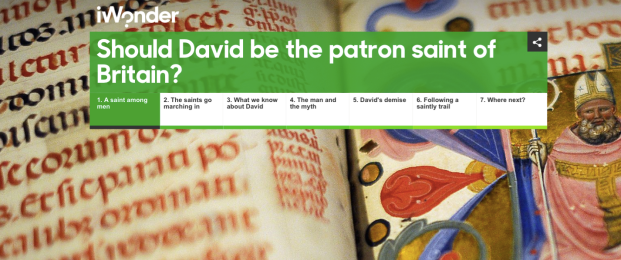
Here’s some more information about St David from the BBC: click the image below.

BBC Banner

Letter to a 6-year old

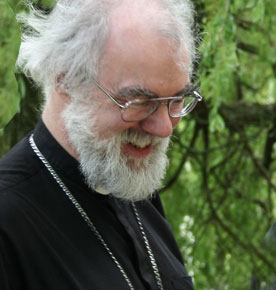
A six-year-old Scottish girl named Lulu wrote a letter to God: “To God, How did you get invented?” Lulu’s father, who is not a believer, sent her letter to various church leaders: the Scottish Episcopal Church (no reply), the Presbyterians (no reply), and the Scottish Catholics (who sent a theologically complex reply). He also sent it to the (now former) Archbishop of Canterbury, who sent the following letter in reply:

Rowan

Dear Lulu,

Your dad has sent on your letter and asked if I have any answers. It’s a difficult one! But I think God might reply a bit like this –

‘Dear Lulu – Nobody invented me – but lots of people discovered me and were quite surprised. They discovered me when they looked round at the world and thought it was really beautiful or really mysterious and wondered where it came from. They discovered me when they were very very quiet on their own and felt a sort of peace and love they hadn’t expected. Then they invented ideas about me – some of them sensible and some of them not very sensible. From time to time I sent them some hints – specially in the life of Jesus – to help them get closer to what I’m really like. But there was nothing and nobody around before me to invent me. Rather like somebody who writes a story in a book, I started making up the story of the world and eventually invented human beings like you who could ask me awkward questions!’

And then he’d send you lots of love and sign off. I know he doesn’t usually write letters, so I have to do the best I can on his behalf. Lots of love from me too.

+Archbishop Rowan

(with thanks to Ben Myers at Faith and Theology: http://www.faith-theology.com)

Prayer, fasting and almsgiving: what’s the point?

PFA

Lent is a great time to deepen our spiritual selves through prayer, fasting and almsgiving: but all three must be done in balance and in harmony with each other. Every now and then I hear people say that “I’m not giving up anything for Lent, I’m going to do something extra” and this misses the point. If they do something extra, then the increase in charity is good – but the “extra” they’re doing is often for the sake of charity, which is just the almsgiving they should be doing anyway. Where has the “extra” gone now? We often ask “what are you giving up for Lent?” but almost never pose the question, “What’s your almsgiving this year?” or “what’s your extra prayer devotion this year?” Those who say they are “doing extra” instead of fasting, run the risk of only doing the almsgiving, or they end up doing a double dose of almsgiving and prayer, yet still no fasting. This is not good. The hardest thing to find in life in balance, and balance must be part of our spiritual lives too.

The reason why the three are important, are because they address the three fundamental relationships we have: our relationship to God, our relationship to neighbour, and the relationship we have with ourselves.

Prayer concerns our relationship with God – by deepening our prayer life, we come to have a better and more intimate relationship with God. (Although there are times when God may call us into a ‘desert experience’ when we seem to loose all contact with him).

Almsgiving concerns our relationship with our neighbours – it’s more than just giving money to the poor: we can come to love and empathise with our neighbour thorough many different works of charity. This includes giving money to poor, but it may be more helpful to support our neighbour who is not poor by giving them our time so that we can listen to them in their needs. Our neighbour needing charity is not just the homeless person we see on the street, but could be a friend who needs a shoulder to cry on, a family member who needs careers advice, or a work colleague who is stressed about some element of their job.

Fasting concerns the complex relationship we have with ourselves. How can we love our neighbour as ourselves, if we don’t know the “me” that I am loving, or even trying to love? Through fasting we discipline ourselves so as not to be fickle to the emotions, yearnings and temptations that blow us around every day. We learn that we can control our desires and temptations so as to live more freely for doing what is right. We often act on impulse without considering a situation, but fasting allows us to master the impulse so that we may more readily discern what we should do as a Christian response to a situation.

As we undertake our Lenten disciplines, let us pray for each other that we might find a balance in our prayer, fasting and almsgiving, so as to comprehend more readily ourselves, our God and our neighbour.