
Women’s Day of Prayer – at Albany Church, Hill Street at 2pm. All are welcome to attend.
Mary Padfield is looking for a reader to help at this event. If you would be able to take part, please give her a call on 763508
Women’s Day of Prayer – at Albany Church, Hill Street at 2pm. All are welcome to attend.
Mary Padfield is looking for a reader to help at this event. If you would be able to take part, please give her a call on 763508

Lent is a great time to deepen our spiritual selves through prayer, fasting and almsgiving: but all three must be done in balance and in harmony with each other. Every now and then I hear people say that “I’m not giving up anything for Lent, I’m going to do something extra” and this misses the point. If they do something extra, then the increase in charity is good – but the “extra” they’re doing is often for the sake of charity, which is just the almsgiving they should be doing anyway. Where has the “extra” gone now? We often ask “what are you giving up for Lent?” but almost never pose the question, “What’s your almsgiving this year?” or “what’s your extra prayer devotion this year?” Those who say they are “doing extra” instead of fasting, run the risk of only doing the almsgiving, or they end up doing a double dose of almsgiving and prayer, yet still no fasting. This is not good. The hardest thing to find in life in balance, and balance must be part of our spiritual lives too.
The reason why the three are important, are because they address the three fundamental relationships we have: our relationship to God, our relationship to neighbour, and the relationship we have with ourselves.
Prayer concerns our relationship with God – by deepening our prayer life, we come to have a better and more intimate relationship with God. (Although there are times when God may call us into a ‘desert experience’ when we seem to loose all contact with him).
Almsgiving concerns our relationship with our neighbours – it’s more than just giving money to the poor: we can come to love and empathise with our neighbour thorough many different works of charity. This includes giving money to poor, but it may be more helpful to support our neighbour who is not poor by giving them our time so that we can listen to them in their needs. Our neighbour needing charity is not just the homeless person we see on the street, but could be a friend who needs a shoulder to cry on, a family member who needs careers advice, or a work colleague who is stressed about some element of their job.
Fasting concerns the complex relationship we have with ourselves. How can we love our neighbour as ourselves, if we don’t know the “me” that I am loving, or even trying to love? Through fasting we discipline ourselves so as not to be fickle to the emotions, yearnings and temptations that blow us around every day. We learn that we can control our desires and temptations so as to live more freely for doing what is right. We often act on impulse without considering a situation, but fasting allows us to master the impulse so that we may more readily discern what we should do as a Christian response to a situation.
As we undertake our Lenten disciplines, let us pray for each other that we might find a balance in our prayer, fasting and almsgiving, so as to comprehend more readily ourselves, our God and our neighbour.
Today is the feast of Our Lady of Lourdes and the world day of prayer for the sick.

Pope Francis has issued a letter to mark the occasion and later today Bishop Tom shall be celebrating a Mass in Swansea for the patients and healthcare workers in Menevia. Fr Liam, as Chaplain to Withybush hospital, shall be concelebrating. At this time let us keep in our thoughts and prayers all those from our parish who are sick and ill, and all those who care for them. Let us pray for the intercession of Our Lady and St Bernadette that Withybush hospital may not be denuded of vital services which effect our communities so profoundly.
It’s Saint Blaise’s Day – the day where you can get your throat blessed by the imposition of candles.

St Blaise, according to legend, cured a boy of choking on a fishbone and, since then, he has been invoked as an intercessor for good health. Fr Owen will give blessing of throats and say the prayers for the sick at St Luke’s Chapel in Withybush hospital at 2pm today.
St Blaise was the bishop of Sebastea in Armenia in the early 4th century. While the truth of the fishbone story is debated, it is known that many people went to him for prayers when they were sick and that he cured many of them. There are ancient medical texts in which he is referenced. During a persecution he was taken captive and attacked with spiked iron paddles before being martyred by beheading. He is the patron saint of wool manufactures because the instrument of his torture resembled that of a wool-comber’s comb, called a carding tool (pictured).

There is another legend: On the way to Sebastea, Blaise met a poor woman whose pig had been taken by a wolf. At the command of Blaise, the wolf returned the pig to its owner, safe and well. Later, while Blaise was in prison awaiting execution, the woman whose pig he’d saved came to see him. She gave him two wax candles as a gift to light his prison cell. Hence the blessing with candles which were themselves blessed yesterday.
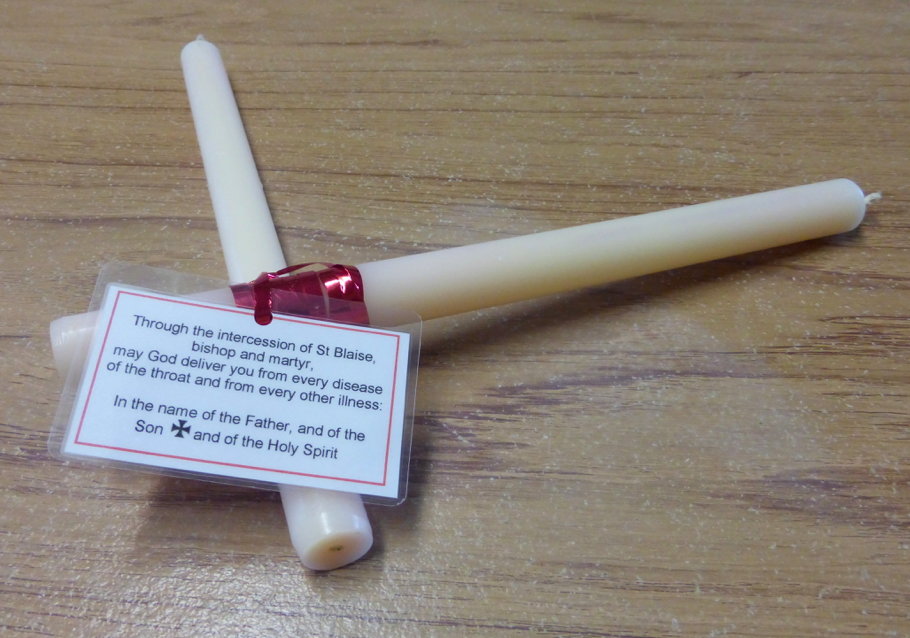
…and so, in our parish, we have blessed the candles and carried the light into the Church – a light to enlighten all nations!
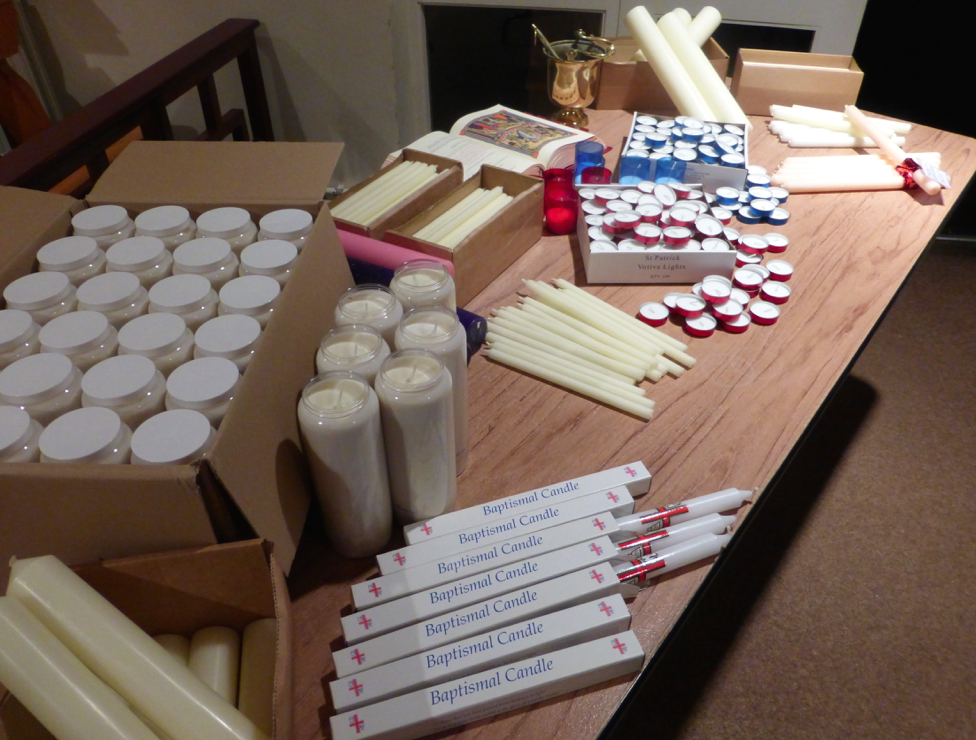
And tomorrow at 2pm in the hospital, we shall bless throats.
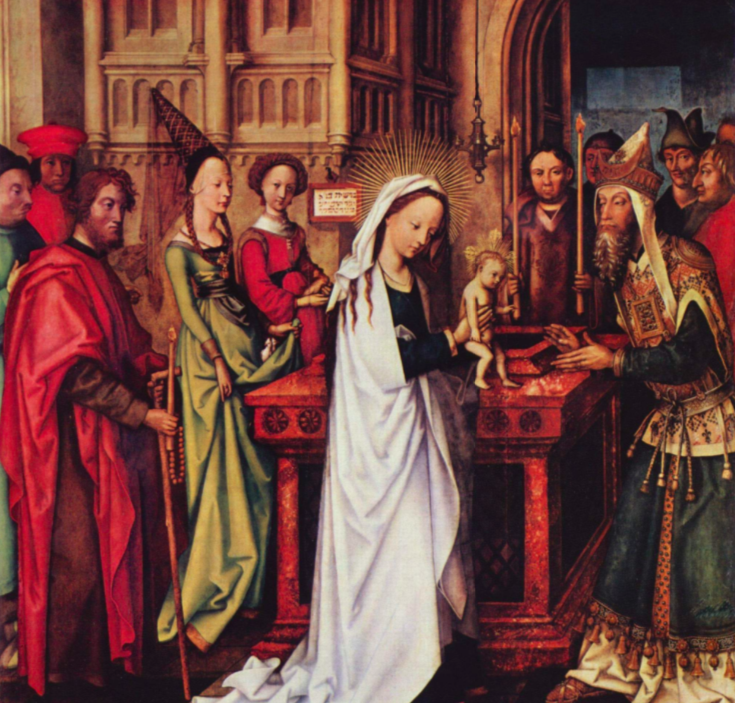
February 2nd is the feast of the Presentation of the Lord in the Temple, sometimes known as Candlemas. The feast recalls the Jewish purification rites, which would have taken place 40 days after the birth of a child. It was on this occasion when Mary offered sacrifices for her and her son’s purification, and also when the Holy Family met Anna and Simeon in the temple.
We recall on this day, and on Good Friday, the prophecy of Simeon that “a sword shall pierce you own soul too, so that the secret thoughts of many might be revealed” (Luke 2:34-35).

On this day’s Mass, the candles that are to be used for the next liturgical year are blessed, hence the common name for the day ‘Candlemas’. Each member of the congregation also gets to keep a blessed candle for use in their home. Traditionally this candle was used to light the way of the priest from the font door of the home to the sick bed, when he was bringing Holy Communion to the ill and dying. Many still like to keep to this practice and it is not uncommon to be met at the door of the house with a lit candle when arriving with the Blessed Sacrament. Others light their candles in times of strife as an act of prayer– the polish community light their candles in heavy storms and pray for good weather to return.
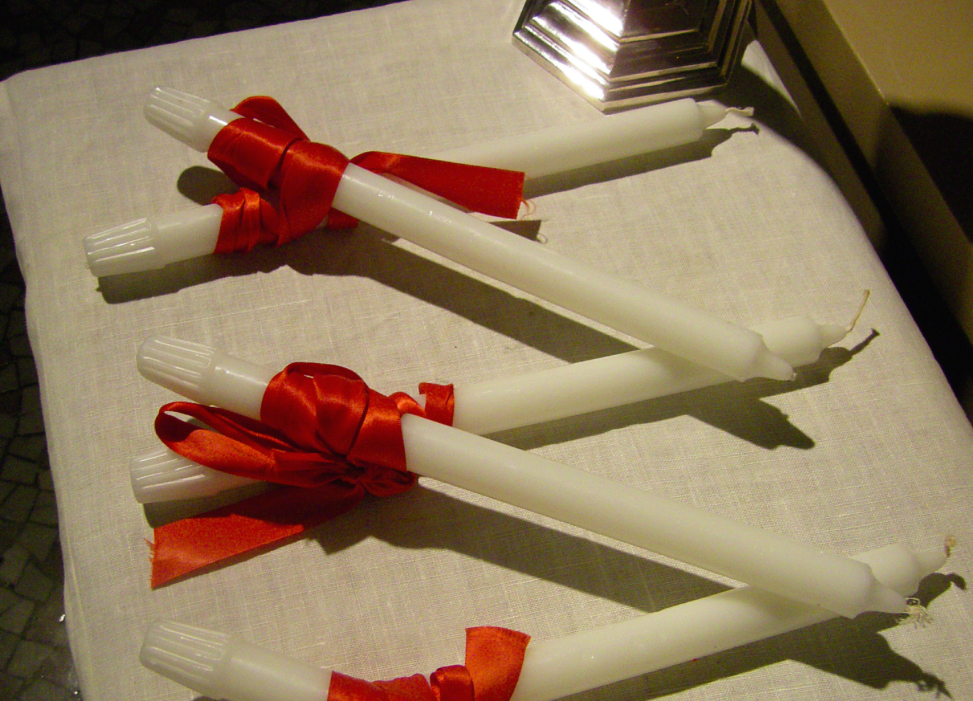
Two of the candles, which are blessed on this day, are then used the following day, February 3rd, the day of Saint Blaise. St Blaise cured a child of choking on a fishbone and, as such, he has become the patron saint of illnesses of the throat. The blessing of throats, by invoking the intercession of St Blaise, is carried out on this day by placing the two candles across the throats of the faithful.

There will be an Advent Retreat in Cardigan at the National Shrine on 13th December led by the visiting priest Fr Giuseppe Cardamone. For more information and to see the poster click here.
 St David and St Patrick Catholic Church
You must be logged in to post a comment.