We have just opened a Book of Condolences on the archdiocese website where people can leave Messages and prayers celebrating the life and work of Pope Francis: https://rcadc.org/sign-our-digital-book-of-condolence-for-pope-francis/
Tag Archives: Pope Francis
Archbishop Mark Issues a Video Message on the Death of Pope Francis
In this moving tribute, Archbishop Mark offers a heartfelt reflection on the life, witness, and legacy of Pope Francis.
From his episcopal motto Miserando atque eligendo (“Looking with mercy, he called him”) to his tireless commitment to the poor and marginalised, Pope Francis lived the Gospel with deep compassion and humility.
As Archbishop Mark recalls, he was a man who described himself simply as a “saved sinner” – someone transformed by the mercy of God, and determined that others might encounter that same mercy.
He stood close to those on the margins – the homeless, the migrant, the forgotten – embodying Christ’s love and inviting the Church to do the same.
As we commend Pope Francis to the Father’s house, we pray that he may hear the words he surely longed to hear:
“Well done, good and faithful servant. Enter into the joy of your master.”
Please join us in praying for the repose of his soul.
Original post in the Archidiocese of Cardiff-Menevia website: https://rcadc.org/archbishop-marks-video-message-on-the-death-of-pope-francis/
XXV World Day of the Sick
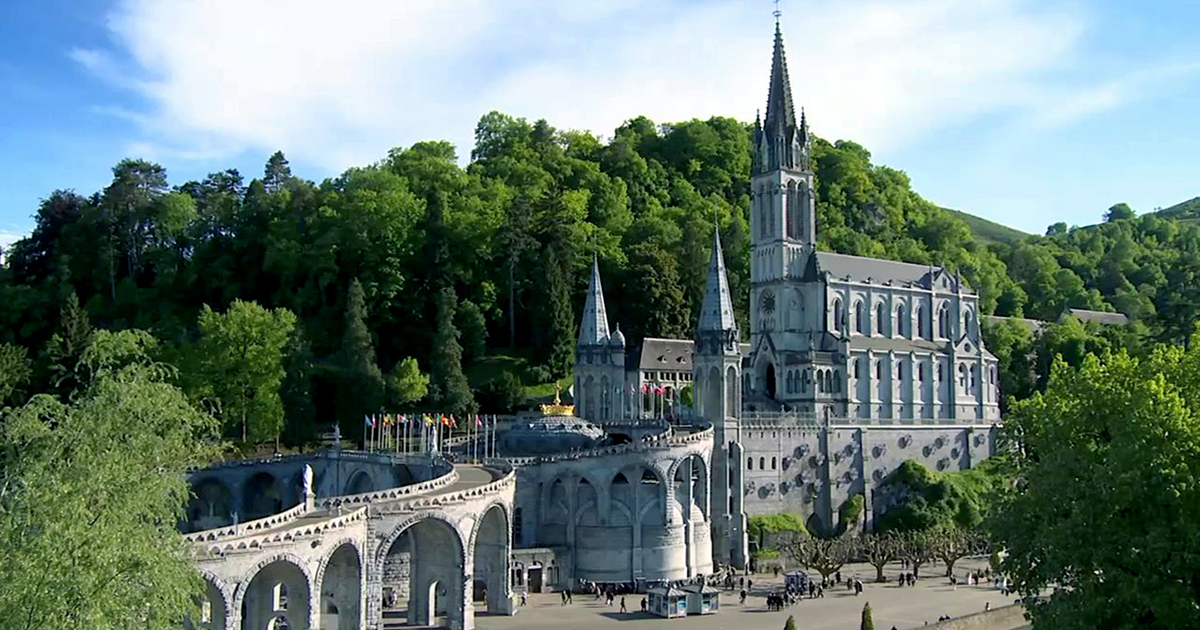
On the Feast of Our Lady of Lourdes, Pope Francis has written this letter for the world day of prayer for the sick.
Dear Brothers and Sisters,
On 11 February next, the Twenty-fifth World Day of the Sick will be celebrated throughout the Church and in a special way at Lourdes. The theme of this year’s celebration is “Amazement at what God has accomplished: ‘The Almighty has done great things for me….’” (Lk 1:49). Instituted by my predecessor Saint John Paul II in 1992, and first celebrated at Lourdes on 11 February 1993, this Day is an opportunity to reflect in particular on the needs of the sick and, more generally, of all those who suffer. It is also an occasion for those who generously assist the sick, beginning with family members, health workers and volunteers, to give thanks for their God-given vocation of accompanying our infirm brothers and sisters. This celebration likewise gives the Church renewed spiritual energy for carrying out ever more fully that fundamental part of her mission which includes serving the poor, the infirm, the suffering, the outcast and the marginalized (cf. John Paul II, Motu Proprio Dolentium Hominum, 11 February 1985, 1). Surely, the moments of prayer, the Eucharistic liturgies and the celebrations of the Anointing of the Sick, the sharing with the sick and the bioethical and theological-pastoral workshops to be held in Lourdes in those days will make new and significant contributions to that service.
Even now, I am spiritually present at the grotto of Massabielle, before the statue of the Immaculate Virgin, in whom the Almighty has done great things for the redemption of mankind. I express my closeness to all of you, our suffering brothers and sisters, and to your families, as well as my appreciation for all those in different roles of service and in healthcare institutions throughout the world who work with professionalism, responsibility and dedication for your care, treatment and daily well-being. I encourage all of you, the sick, the suffering, physicians, nurses, family members and volunteers, to see in Mary, Health of the Infirm, the sure sign of God’s love for every human being and a model of surrender to his will. May you always find in faith, nourished by the Word and by the Sacraments, the strength needed to love God, even in the experience of illness.
Like Saint Bernadette, we stand beneath the watchful gaze of Mary. The humble maiden of Lourdes tells us that the Virgin, whom she called “the Lovely Lady”, looked at her as one person looks at another. Those simple words describe the fullness of a relationship. Bernadette, poor, illiterate and ill, felt that Mary was looking at her as a person. The Lovely Lady spoke to her with great respect and without condescension. This reminds us that every person is, and always remains, a human being, and is to be treated as such. The sick and the those who are disabled, even severely, have their own inalienable dignity and mission in life. They never become simply objects. If at times they appear merely passive, in reality that is never the case.
After her visit to the Grotto, thanks to her prayer, Bernadette turned her frailty into support for others. Thanks to her love, she was able to enrich her neighbours and, above all, to offer her life for the salvation of humanity. The fact that the Lovely Lady asked her to pray for sinners reminds us that the infirm and the suffering desire not only to be healed, but also to live a truly Christian life, even to the point of offering it as authentic missionary disciples of Christ. Mary gave Bernadette the vocation of serving the sick and called her to become a Sister of Charity, a mission that she carried out in so exemplary a way as to become a model for every healthcare worker. Let us ask Mary Immaculate for the grace always to relate to the sick as persons who certainly need assistance, at times even for the simplest of things, but who have a gift of their own to share with others.
The gaze of Mary, Comfort of the Afflicted, brightens the face of the Church in her daily commitment to the suffering and those in need. The precious fruits of this solicitude for the world of suffering and sickness are a reason for gratitude to the Lord Jesus, who out of obedience to the will of the Father became one of us, even enduring death on the cross for the redemption of humanity. The solidarity shown by Christ, the Son of God born of Mary, is the expression of God’s merciful omnipotence, which is made manifest in our life – above all when that life is frail, pain-filled, humbled, marginalized and suffering – and fills it with the power of hope that can sustain us and enable us to get up again.
This great wealth of humanity and faith must not be dissipated. Instead, it should inspire us to speak openly of our human weaknesses and to address the challenges of present-day healthcare and technology. On this World Day of the Sick, may we find new incentive to work for the growth of a culture of respect for life, health and the environment. May this Day also inspire renewed efforts to defend the integrity and dignity of persons, not least through a correct approach to bioethical issues, the protection of the vulnerable and the protection of the environment.
On this Twenty-fifth World Day of the Sick, I once more offer my prayerful support and encouragement to physicians, nurses, volunteers and all those consecrated men and women committed to serving the sick and those in need. I also embrace the ecclesial and civil institutions working to this end, and the families who take loving care of their sick. I pray that all may be ever joyous signs of the presence of God’s love and imitate the luminous testimony of so many friends of God, including Saint John of God and Saint Camillus de’ Lellis, the patrons of hospitals and healthcare workers, and Saint Mother Teresa of Calcutta, missionary of God’s love.
Dear brothers and sisters – the sick, healthcare workers and volunteers – I ask you to join me in praying to Mary. May her maternal intercession sustain and accompany our faith, and obtain for us from Christ her Son hope along our journey of healing and of health, a sense of fraternity and responsibility, a commitment to integral human development and the joy of feeling gratitude whenever God amazes us by his fidelity and his mercy.
Mary, our Mother,
in Christ you welcome each of us as a son or daughter.
Sustain the trusting expectation of our hearts,
succour us in our infirmities and sufferings,
and guide us to Christ, your Son and our brother.
Help us to entrust ourselves to the Father who accomplishes great things.
With the assurance of a constant remembrance in my prayers, I cordially impart to all of you my Apostolic Blessing.
8 December 2016, Solemnity of the Immaculate Conception
Francis
Year of Mercy Week of Prayer for Migrants and Refugees
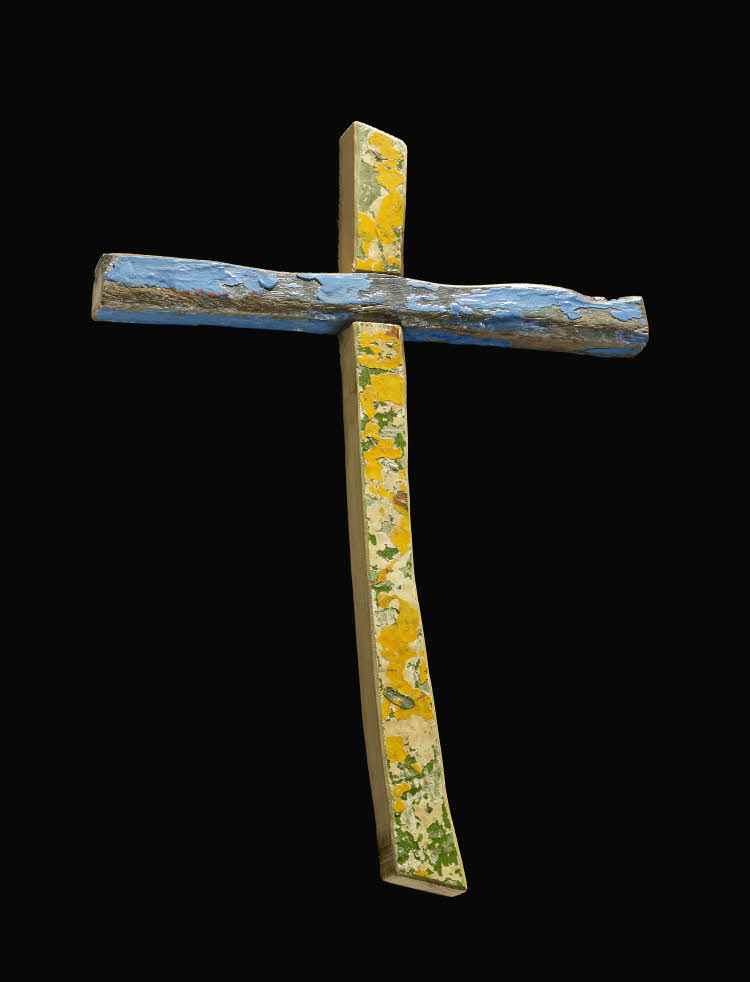
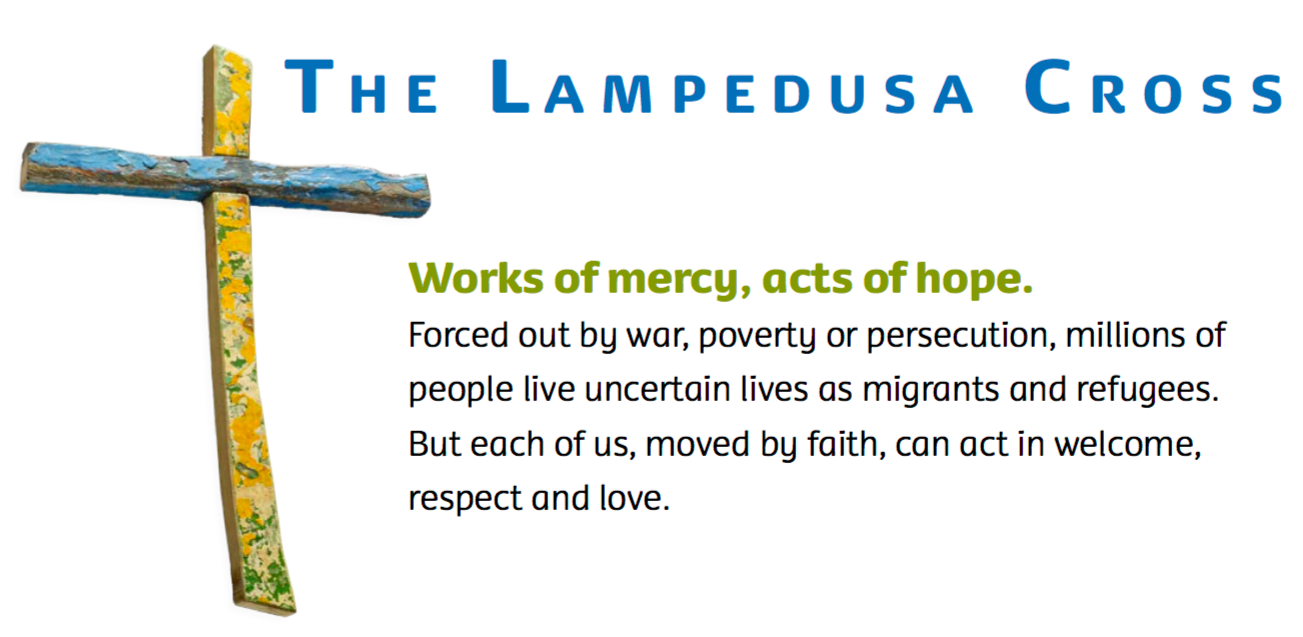
Seemingly small acts can make a massive difference. One example of this is Francesco Tuccio, a carpenter from the small Italian island of Lampedusa. When hundreds of refugees who were fleeing Eritrea and Somalia drowned off the coast of Lampedusa, he was moved to gather the driftwood from the wrecked boats and turn them into crosses, which he offered to survivors as a small but powerful symbol of hope.
Pope Francis carried one of the Lampedusa crosses at a memorial Mass to commemorate people who have died, and the British Museum is now displaying a Lampedusa cross as a reminder to people of the refugee crisis the world is facing.
One such cross is visiting our parish in September and will serve as a focus of prayer as we conclude the Extrodinary Jubilee Year of Mercy.
We will hear a talk from CAFOD on the year of Mercy as the cross arrives to Haverfordwest. There will be a Holy Hour with Benediction and the oportunity to make a our personal messages known to the mingrant population on prayer cards. A evening votive Mass will conclude our week of prayer.
Week of Prayer from Thursday 22nd September to Wednesday 28th September.
Amoris Lætitia
Pope Francis has recently publish the Exhortation ‘Amoris Laetitia’ following on from the recent Synod on the Family. This is what the Bishops’ Conference of England and Wales have to say about it.
The Eucharistic Miracle of Buenos Aires
Our Catholic faith teaches us that the bread and wine used at Mass, truly become the body and blood of Christ. When we look at the host, we gaze upon Jesus Christ himself. But there are occasions when even the aspect of the host is changed too, and the veiled reality of the flesh-seen-as-bread is unmasked, and we see the host for what it is – real flesh and blood.
The Refugee Crisis.
In Sunday morning’s homily, Fr Liam demonstrated how three images have defined a moment of crisis. However, when our future-selves look back on this moment, we will not be defined by an image, but by our response. The time will come when we in Haverfordwest will have to act and do our part to help.
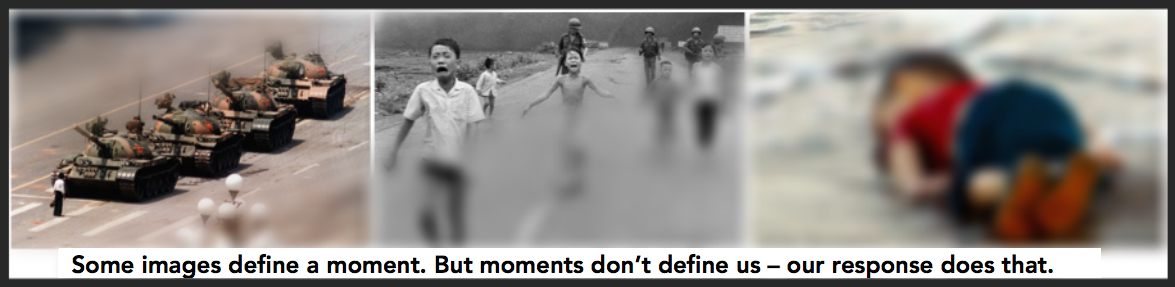
Well, since that homily, just a few hours later at his Angelus blessing in Rome, the Pope asked that every monastery, convent, religious house and parish in Europe should take in and support a refugee family.
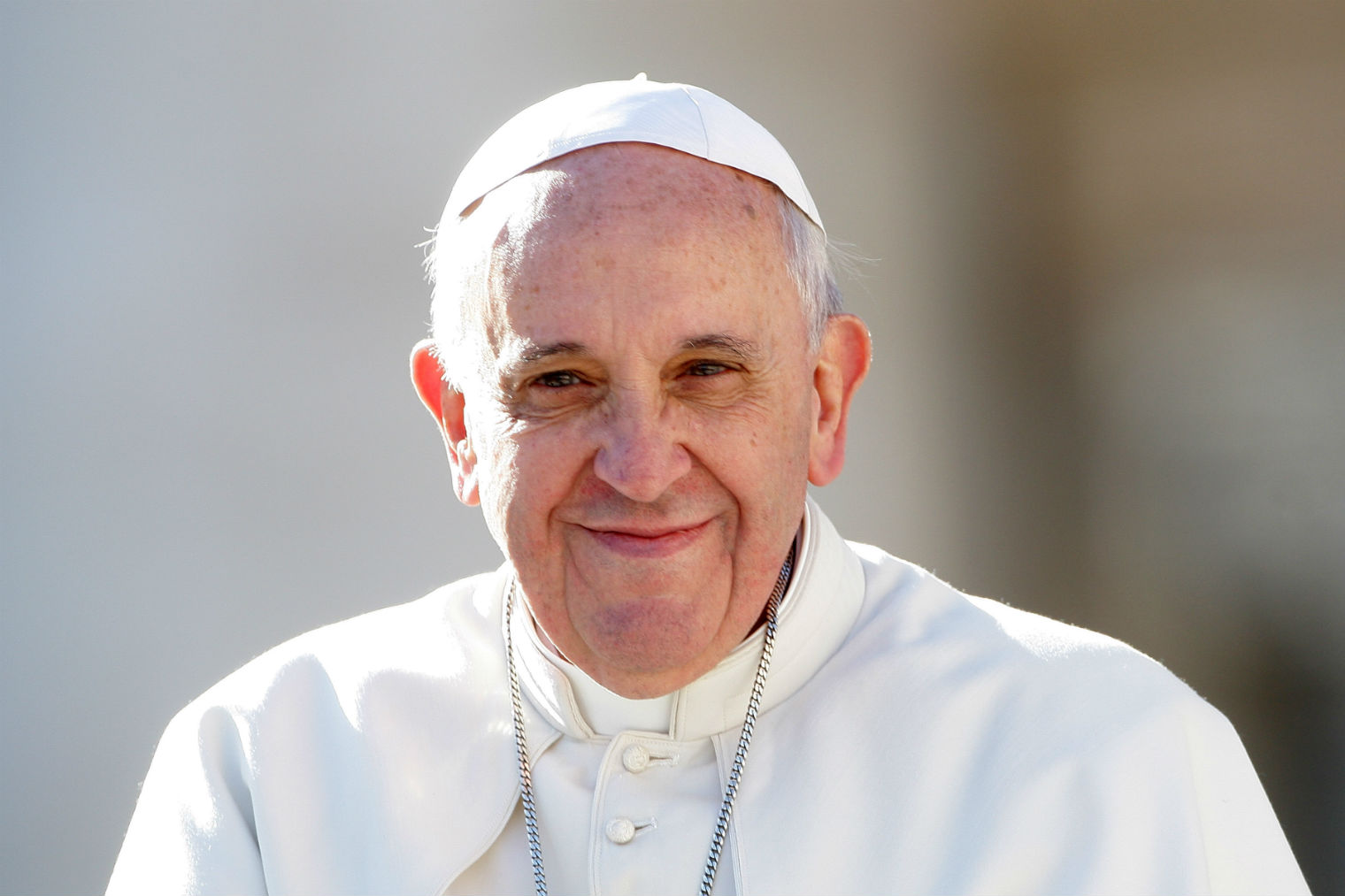
Pope Francis said (6th September 2015):
“Dear brothers and sisters,
God’s mercy is made visible to the word through our works, as can be witnessed by the life of Blessed Mother Teresa of Calcutta, whose anniversary of death we celebrated yesterday.
In view of the tragedy of tens of thousands of refugees fleeing from death by war and hunger, and who are on a journey in the hope of life, the Gospel call us to be close to them who are vulnerable and abandoned.
We have to give them real hope. It is not enough to say “Take courage, have patience!” Christian hope is forceful and has tenacity for those who want to come to safety.
As such, as we come to the Jubilee of Mercy, I appeal to the parishes, religious communities, monasteries and shrines throughout Europe to express the reality of the Gospel and to accommodate a family of refugees. This is a concrete gesture in preparation for the Holy Year of Mercy. May every parish, every religious community, every monastery, every shrine of Europe accommodate a family, starting from my own diocese of Rome.
I turn to my brother Bishops of Europe, true shepherds, to remember that because Mercy is the second name of Love, that their dioceses may support this appeal of mine for “whatever you did for one of the least of these brothers and sisters of mine, you did for me” (Mt 25:40).
As such, the two parishes in the Vatican will at this time welcome two families of refugees.”
(a non-official translation by Fr Liam because the English has not yet been published – forgive any errors I have put on the lips of our Holy Father).
To this the Cardinal Archbishop of Westminster, Vincent Nichols, issued his own reply stating that “Guidance will follow shortly on how the Catholic community in England and Wales can practically respond to this refugee crisis.”

The Cardinal’s full words are (7th September 2015):
“The Catholic Church in England and Wales will respond to Pope Francis’ challenge to be generous in supporting people who have been forced to flee their homes.
We urge government to respond positively to this crisis and to provide the necessary resources and funding to ensure the effective reception and long-term resettlement of these desperate people. We will work with both government and other responsible authorities to meet this grave challenge.
We invite all Catholics to respond in prayer and in real, practical action. It is my hope to join the prayer vigil which is taking place outside Westminster Cathedral tomorrow night (8 September 2015).
Guidance will follow shortly on how the Catholic community in England and Wales can practically respond to this refugee crisis.”
Before rushing in and acting foolishly, our Church leaders need to meet with national and local government to work together formulating a prudent response which can be as full and effective as possible. This response will allow us to demontrate our pastoral charity in the fullest way possible, so that we can answer the demands our faith makes, that whatever you did for one of the least of these brothers and sisters of mine, you did for me. Mt 25:40.
 St David and St Patrick Catholic Church
You must be logged in to post a comment.